A local group to support and encourage a compassionate, cruelty-free, vegan lifestyle. We hold cooking sessions, tasting sessions, information sessions on everything from cruelty-free moisturisers to leather-free walking boots; vegan textiles to the best dairy-free cheese for cheese sauce!
Sometimes birds, rats, mice and other animals move into our homes uninvited. Moles, grey squirrels and foxes may change our gardens and outdoor spaces. It can be quite easy to deter some of these visitors. Animal Aid has a list of advice sheets for humane ways to deter wildlife from our homes. They also have a report Alternatives to Culling with further information.
You are invited to our online Q and A panel session to ask questions about adopting or maintaining a healthy vegan lifestyle especially during COVID-19.
Are you finding it difficult to go or stay vegan during lockdown or generally?
Would you like to meet other new or aspiring vegans?
Are you curious or interested in plant-based lifestyles?
Would you like to learn about the connections between eating meat and the source of COVID-19?
Would you like to safely practise using a new technology to engage with other members of your local community?
If any of those points apply to you, please join us for Vegan Question Time:
Saturday, 2 May from 8pm to 9pm
Online using Zoom Video Conferencing
Free (using your computer or phone and internet connection)
To register and receive the meeting ID and password, please email us info@3valleyvegns.org.uk and, if you have a question to share with the panel, include it in your email.
We will be using Zoom Video Conferencing to host this panel session. After registering, we will send you a link to use when the panel begins, and a password. You will need a computer or phone with speakers/headphones and an internet connection (Wi-Fi or wired network is best).
We recommend you prepare in advance by installing the ‘Zoom Client for Meetings’ app on your PC or Mac, or ‘ZOOM Cloud Meetings’ app for Android, or iOS or Kindle Fire. If you cannot install applications, you can use the web browser instead.
The video above explains the basics of using Zoom for the first time. Our session will also ask you to enter a password when you connect (not mentioned in the video).
After you connect to the session, you will be invited to join with your webcam; this is optional, you do not need to share your face on video.
When you are in the session, you will be invited to connect with computer audio; this means that you will use your computer or phone’s speakers/headphones and microphone to hear everyone. The other option is to dial into the Zoom switchboard on your telephone (we do not recommend this).
When you connect with computer audio, your microphone will be muted. We request that everyone in the session mute their microphone unless the Chair invites them to speak. This will help us to keep order and avoid unnecessary background noise.
Today we’re in the middle of a pandemic. A new coronavirus has passed from animals into humans and countries worldwide are fighting to limit the number of people infected with the virus which causes COVID-19. It goes without saying that the most important aspect of fighting infections such as COVID-19 is to maintain strict hygiene and to reduce the chance of the virus entering the body. The fewer viruses enter your body the better chance your immune system has.
A healthy lifestyle is the second most important aspect of preventing or reducing the impact of infections. A healthy lifestyle reduces your risk of developing chronic diseases such as diabetes, heart disease and cancer and the evidence shows us that people with chronic diseases are more at risk of dying when they develop infections such as COVID-19.
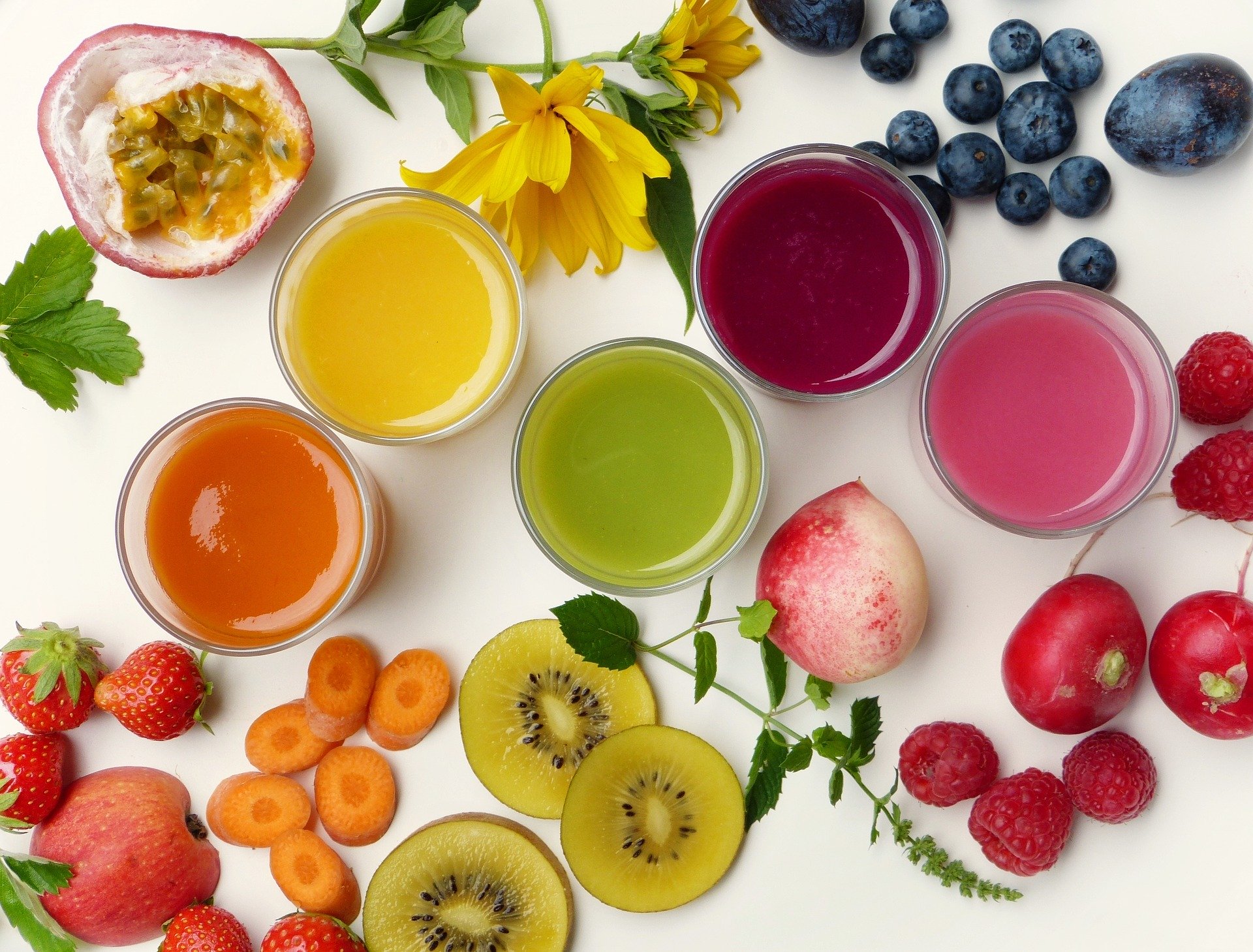
A varied diet with a strong emphasis on whole plant foods is important and it’s the overall quality of the diet that matters rather than individual components. Try to emphasise whole plant foods such as lots of brightly coloured and green vegetables and fruit (aim for up to 10 portions a day), whole grains, legumes, nuts and seeds. A whole food diet helps us to maintain a healthy weight but also provides the essential nutrients we need to reduce our risk of both long term diseases and short term infections. See the Vegan Approach for more information about a balanced vegan diet.
A healthy diet gives us a healthy microbiome which means keeping all those gut bacteria happy. The most important thing is to eat plenty of fibre, which is found only in plant foods as this feeds the gut bacteria. A healthy microbiome is important for a healthy immune system but we still don’t know exactly how this works. We do know that most people in the UK don’t eat enough fibre so increase your whole plant foods, such as legumes, vegetables and flax.
What lifestyle choices affect the immune system?
Not smoking is vital for a healthy immune system. Smoking compromises the immune response because of the chemicals associated with it, such as cadmium, carbon monoxide, nicotine, and nitrogen. It also aggravates bacterial and viral pulmonary infections and rheumatoid arthritis.
Good hydration keeps the body functioning properly. Water is great but different types of teas and some coffee are also healthy. Try to limit alcohol as despite being a depressant (which isn’t good for stress) it’s also linked to some chronic diseases such as cancer.
Exercise has been shown to improve the immune system and to reduce the risk of chronic diseases. Exercise also boosts the presence of endorphins (the pleasure hormone) which makes it a good way of managing stress. Try to aim for at least 150 minutes of moderate intensity physical activity a week and strength building exercises twice a week.
Sleep is the time when your immune system kicks into action fighting infections and when we’re ill we tend to sleep more – it’s the body’s way of telling us what we need to do. If we lack sleep we’re more likely to become susceptible to viruses. Try to get at least seven hours a night of good quality sleep. Turn off electronic devices at least an hour before going to bed and sleep in a cool and dark room. Try not to eat for a couple of hours before going to bed.
What about society and the environment?
Stress promotes inflammation and reduces a body’s defence against infection. Long term stress can lead to high levels of cortisol which impairs the immune system. Stress reduction is easier said than done but there are ways of reducing stress such as breathing exercises, journalling, mindfulness, yoga or other ways that work for you.
Image: Blue Zones
Maintaining social contacts even if you can’t meet up with people is important as part of a healthy lifestyle. The Blue Zones are areas in the world where people live longer and healthier lives than elsewhere in the world. They differ in many ways but they all have in common having a purpose, living amongst people they are happy with and having social contacts with other people they like.
Reducing our exposure to environmental toxins could affect our immune system but the jury’s still out on this one. There are indications that the increasing amount of pollutants we’re exposed to both in and outside our homes could impair both our own and our children’s immune system. Cutting down on chemicals in the home and garden is easy. It’s not quite so easy to avoid air pollution but simply follow some of the tips from the BBC to cut your exposure.
What specific nutrients can help?
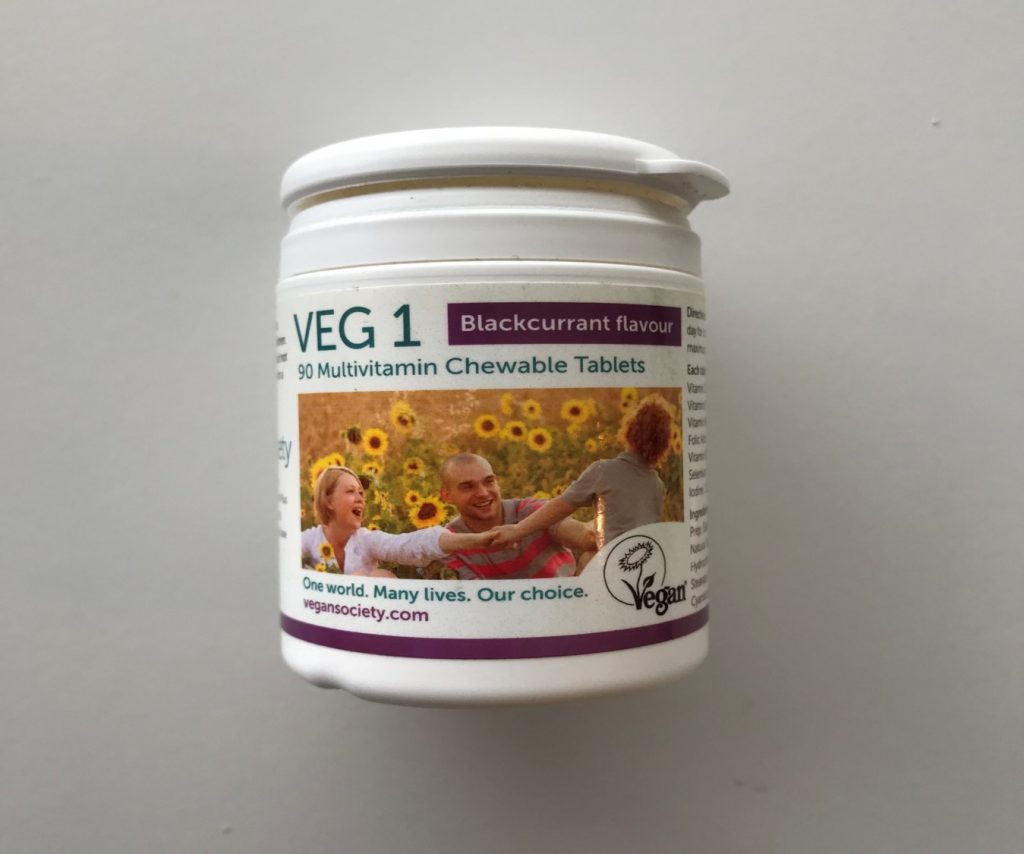
Veg1 (Image: the Vegan Approach)
Once you’ve considered the guidance above and thought about how you can improve your general health, there is some evidence that points to specific nutrients that can help to support a healthy immune system.
Vitamin D has been shown to reduce the risk of acute respiratory tract infections and everyone in the UK is advised to supplement in the winter. It’s also a good idea to supplement if you stay indoors a lot, are older or cover up your body. Veg1 from The Vegan Society provides a vegan source of this vitamin.
Antioxidants may help to boost the immune system and some that have been found to be beneficial are:
Flavonoids found in many plant foods are shown to help the immune system and have been found to significantly reduce the risk of upper respiratory tract infections. Eat and drink plenty of the following: apples, green tea, grapes, berries and dark chocolate (more than 70% cocoa content).
Vitamin C is easily provided by the diet but lots of people don’t get enough. Eat plenty of fruits such as citrus (oranges, grapefruit), pepper, kiwi fruit and broccoli.
Beta carotene which is also used to form vitamin A, and is found in brightly coloured fruits and vegetables such as carrots, red peppers, dark greens such as kale and apricots.
Zinc is important for the immune system and can be found in nuts, seeds and pulses. Sprouting pulses and nuts helps to improve the amount of zinc available to the body.
Selenium can be lacking in the UK diet but a day’s supply is found in one or two brazil nuts. Don’t overdo selenium though as it can be toxic in large doses.
Curcumin is anti-inflammatory, anti-oxidant and anti-infective and some laboratory studies have shown it can fight viruses. It’s found in turmeric which is one of many healthy spices. It’s easy to incorporate it in all sorts of foods such as tagine, curry, scrambled tofu, even in pasta.
It’s important to remember that all of the above are best eaten in the form of food rather than as supplements (apart from vitamin D) as there is so much we don’t know about how food works synergistically. Again, it’s the quality of the overall diet that’s important.
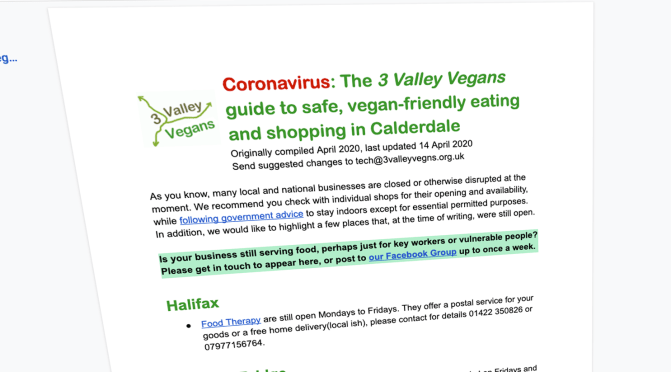
As you know, many local and national businesses are closed or otherwise disrupted at the moment. We recommend you check with individual shops for their opening and availability, while following government advice to stay indoors except for essential permitted purposes. In addition, we would like to highlight a few places that, at the time of writing, were still open.
Is your business still serving food, perhaps just for key workers? Please get in touch to appear here, or post to our Facebook Group up to once a week.
Update 1: Following Government advice, we have to cancel this event, sadly.
Twice before, 3 Valley Vegans ended a great walk at the Pace Egg Play(s) in Heptonstall. We’re going to do it again this year and this time our walk will start in Todmorden. It will take us around 3 hours to walk the 9 km (5.5 miles) route to Heptonstall and, if we arrive on time, we will be able to watch the Calder High School version of the play at 3pm and the Heptonstall Players’ version at 4pm. The walk will afford some great views and will pass some lovely places as well as working farms where animals do not live the kind of lives that vegans wish for them. The Pace Egg plays are a Good Friday tradition and it is great fun to be part of the large and interactive audience. (Final details TBC)
🕦 Time & date: Good Friday, 10th April 2020 before 11:30 am as we will leave promptly at that time.
🚏 Meeting place: The bus stop on the opposite side of the road to the Shell garage on Halifax Road, Todmorden (heading out of Todmorden towards Halifax, the bus stop is on the left 100m before the left turn to Hallroyd Road).
👞 Equipment: The walk could well cross muddy and slippery terrain and so waterproof walking boots and suitable clothing are a must. Maybe walking sticks too.
😬 Severity: The 9 km walk will involve climbs totalling 516m and the highest point will be 326m above sea level. (We will have started at 124m above sea level.)
🍞 Food: Please bring only vegan food to eat for lunch and/or during the walk. That’s the rule for 3VV walks.
🚌 Getting home afterwards: those returning to Todmorden can either do it on foot again following a different route on the same side of the valley (north) or take a bus.
Regrettably, we have taken the difficult decision to postpone this event for a while. I’m sure you can appreciate the reasons. Apologies for the inconvenience.
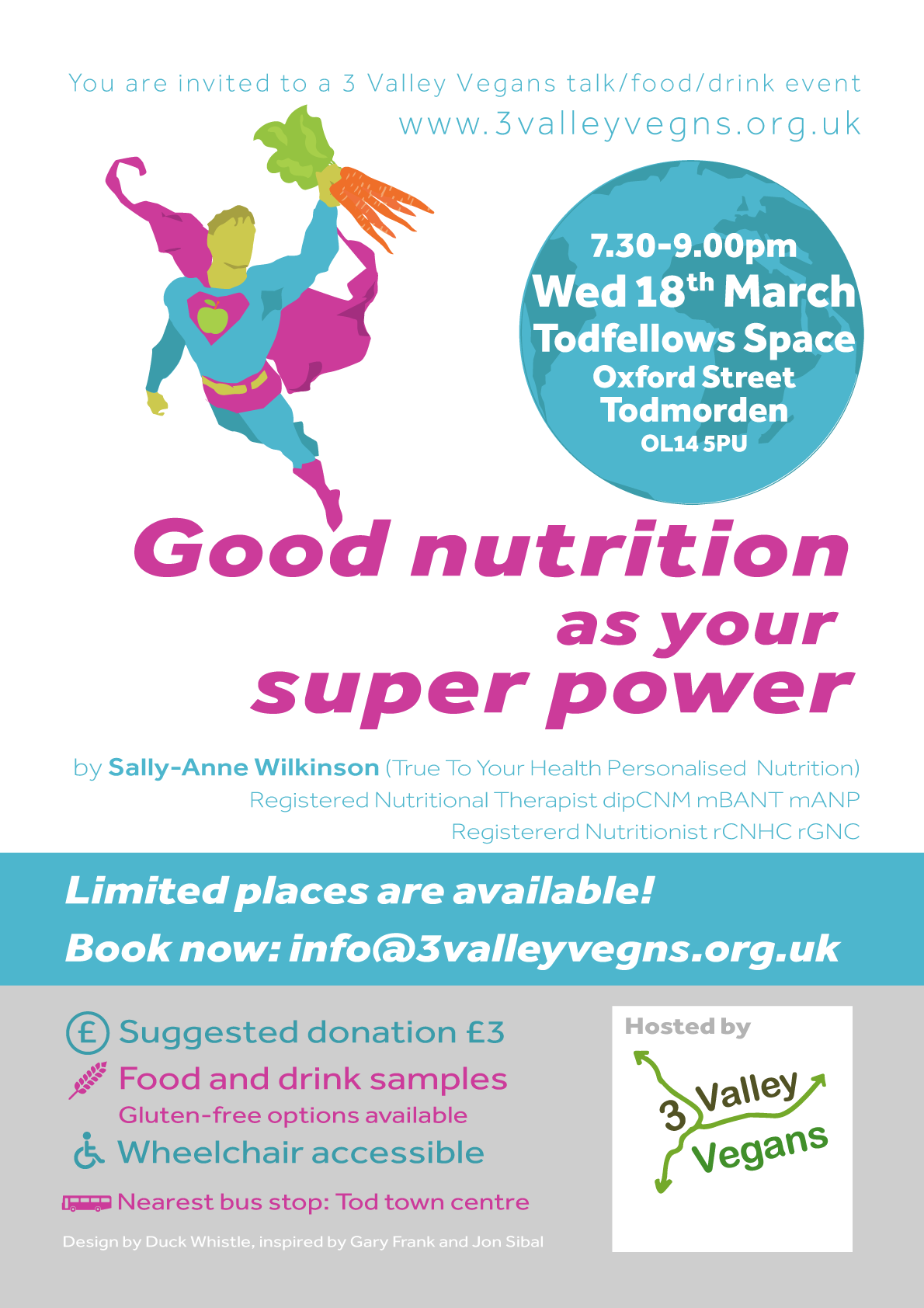
You are invited to a 3 Valley Vegans talk/food/drink event: Good nutrition as your super power
The Todfellows Space
Oxford Street, Todmorden OL14 5PU
(Near the centre of Tod, behind Kava)
Suggested donation: £3
Sally will be covering:
How familial ill health led to her becoming a registered nutritional therapist, and how it helped improve everyone’s health.
Why poor food choices are our own personal Kryptonite
Why genetics aren’t the main reason we succumb to chronic illnesses
What we can do to change our health to more positive outcomes
There’ll be healthy recipes to try, and she’ll also be answering questions about healthy eating, and for those who are interested, how to transfer to a healthy plant-based diet.


 Facebook event



 3 Valley Vegans